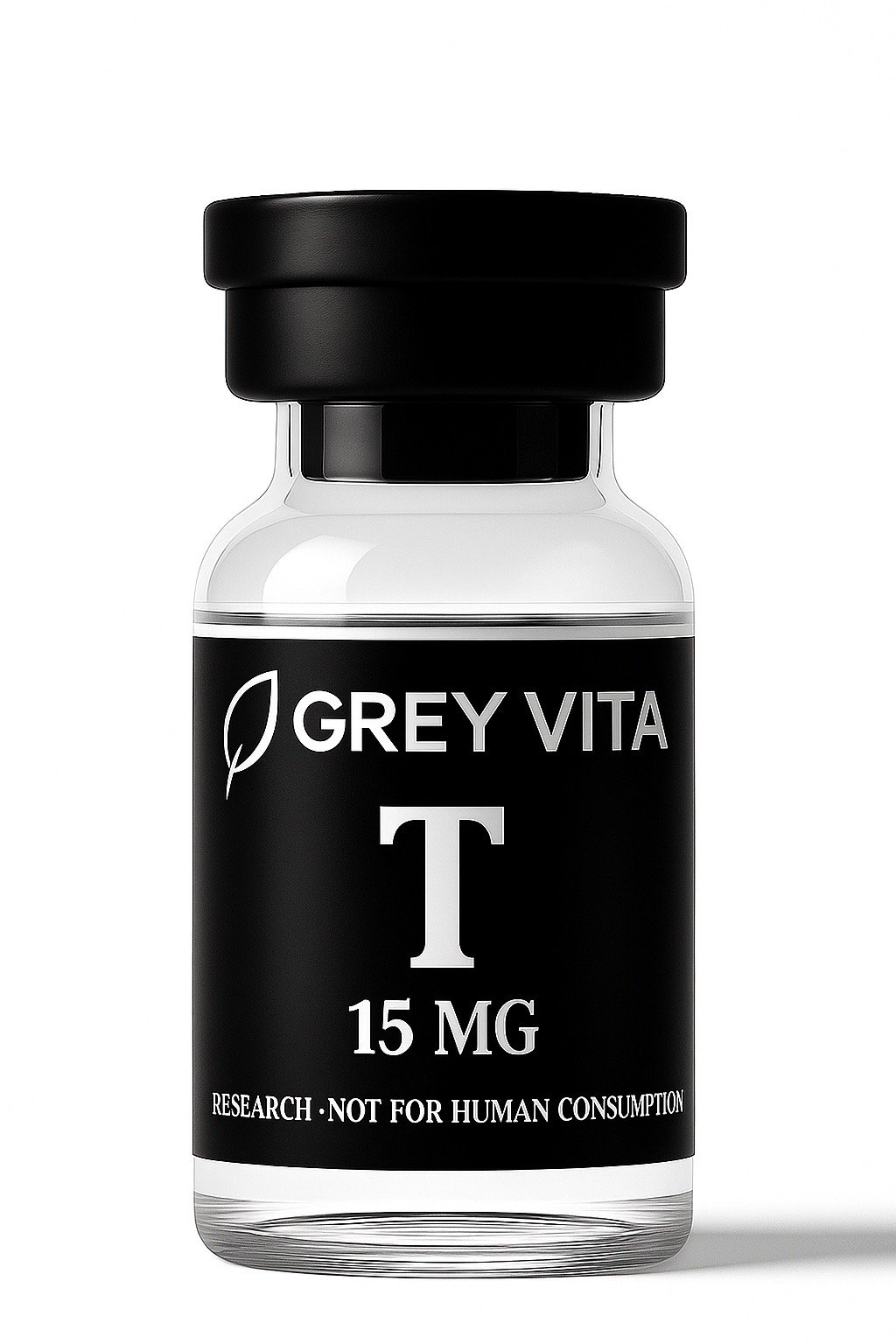

T15 - TIRZEPATIDE 15 MG
CAS number for Tirz is 2023788-19-2.
Out of Stock
All products are shipped in lyphollized or powder form and must be reconstituted to a liquid for research and testing. We are unable to provide any dosing instructions, however all products should be considered pharmaceutical grade.
Tirzepatide – Research Overview
Class: Dual incretin receptor agonist
Targets:
GIP receptor (GIPR) – glucose-dependent insulinotropic polypeptide
GLP-1 receptor (GLP-1R) – glucagon-like peptide-1
Structure: Synthetic peptide with fatty-acid side chain for extended half-life
Research focus: Metabolic regulation, incretin signaling, insulin pathways, glucagon suppression
Tirzepatide is a dual incretin mimetic designed to activate both GIP and GLP-1 receptors.
It has been studied in rodent and non-human primate research models for its effects on:
- Glucose control
- Energy balance
- Appetite-regulation pathways
- Body-weight regulation
- Incretin hormone signaling
- Insulin secretion and glucagon suppression
All findings refer strictly to preclinical data, not established human outcomes.
Mechanism of Action (Preclinical)
Tirzepatide works by stimulating two incretin receptors simultaneously, creating a multi-layered metabolic signal.
- GIPR Activation (Primary Pathway)
GIP plays major roles in:- Insulin secretion (increased insulin when glucose is high)
- Lipid metabolism
- Adipocyte signaling (fat-cell hormone communication)
Preclinical effects:
- Enhanced glucose-dependent insulin release
- Improved insulin sensitivity
- Reduced adipose inflammation (less inflammatory signaling in fat tissue)
- GLP-1R Activation (Secondary Pathway)
- GLP-1 regulates:
- Insulin secretion
- Glucagon suppression
- Gastric emptying
- Appetite signaling
Preclinical effects:
- Reduced glucagon output
- Slower gastric emptying (food leaves stomach more slowly)
- Lower appetite-signaling activity in the hypothalamus
- Improved glucose tolerance
- Dual-Incretin Synergy
- The key feature of tirzepatide is combined activation of GIPR + GLP-1R.
- In preclinical metabolic studies, dual action has shown:
- Greater metabolic effect than either pathway alone
- More robust insulinotropic response
- Improved energy expenditure markers
- Synergistic appetite-regulation signals
(The “twin incretin” activity is stronger than GLP-1 alone in most rodent models.)
Metabolic Effects Observed in Preclinical Models
-
Glucose Homeostasis
Rodent studies show:- Increased glucose-dependent insulin secretion
- Reduced fasting and post-meal glucose excursions
- Improved β-cell stress markers (better pancreatic function)
- Decreased glucagon levels during hyperglycemia
- Enhanced whole-body insulin sensitivity
-
Body-Weight Regulation Pathways
- Preclinical findings include:
- Reduced food intake
- Lower activation of hypothalamic hunger pathways (ghrelin + AGRP neuron reduction)
- Increased energy expenditure in brown adipose tissue
- Higher fatty-acid oxidation (fat burning)
- Reduced lipogenesis (new fat stored)
-
Adipose Tissue Biology
In rodent adipocyte studies:- Lower inflammation in fat depots (reduced IL-6, TNF-α)
- Improved adiponectin signaling (fat-cell hormone that improves metabolism)
- Reduced hypertrophic adipocytes (smaller fat cells)
-
Liver & Lipid Findings
- Tirzepatide has been evaluated in models of:
- Hepatic fat accumulation
- Lipotoxicity
- Nonalcoholic fatty liver markers
Preclinical results show:
- Reduced triglyceride accumulation
- Improved hepatic insulin signaling
- Better mitochondrial β-oxidation of fats
- Efficacy Observed in Preclinical Studies
- Metabolic Profile
- Strong insulinotropic response when glucose is elevated
- Greater suppression of glucagon compared to single-pathway incretins
- Improved glucose disposal rates
- Lower inflammatory cytokine markers
Appetite & Weight
- Reduced caloric intake
- Lower preference for high-fat diets in rodent choice studies
- Increased satiety signaling
- Significant weight-loss effects in diet-induced obese animals
Cardiometabolic Markers
- Lowered triglycerides and cholesterol in rodent models
- Improved endothelial NO signaling (supports vascular tone)
Reduced oxidative stress markers
(All results from animal/cell studies, not human therapy.)
Safety & Tolerability (Preclinical)
- Generally well-tolerated in animal models
- GI slowing observed due to GLP-1R activity
- No major organ toxicity at research doses
- Long-term safety and PK/PD in humans remain unestablished
- Not FDA-approved for research outside regulated clinical programs
Regulatory Status & Disclaimer
- Tirzepatide is an investigational research peptide.
- It is not approved by the FDA or any regulatory agency for therapeutic, dietary, or cosmetic use.
- For Research Use Only.
- Not for human consumption.
- Not for veterinary use.
- Not for diagnostic or therapeutic applications.
- No medical claims are made or implied.
- Researchers are responsible for appropriate use under local regulation.
Key References (Preclinical)
Wilson J. Dual GIP/GLP-1 receptor activation in metabolic regulation. Cell Metabolism.
Coskun T. Mechanistic profile of tirzepatide in rodent models. Diabetes.
Samms R. GIP receptor biology and energy balance. Endocrinology.
Pfluger P. Incretin hormone synergy and metabolic control. Nat Rev Endocrinol.
Gribble F. Gut peptide signaling in metabolism. J Physiol.
Research Use Only
This product is intended strictly for laboratory and in vitro research applications. T15 is NOT for human or veterinary use, diagnostic purposes, or therapeutic applications. Must be handled by qualified professionals in a controlled setting.
Product Care:
Store in a cool, dry place away from light. If reconstituted, Please Refrigerate. For longer term storage, freezing at -20°C is recommended to maintain integrity.
Product Note:
All products are shipped in lyophilized or original powder form and must be reconstituted to a liquid for research and testing. We are unable to provide any dosing instructions, however all products should be considered pharmaceutical grade.