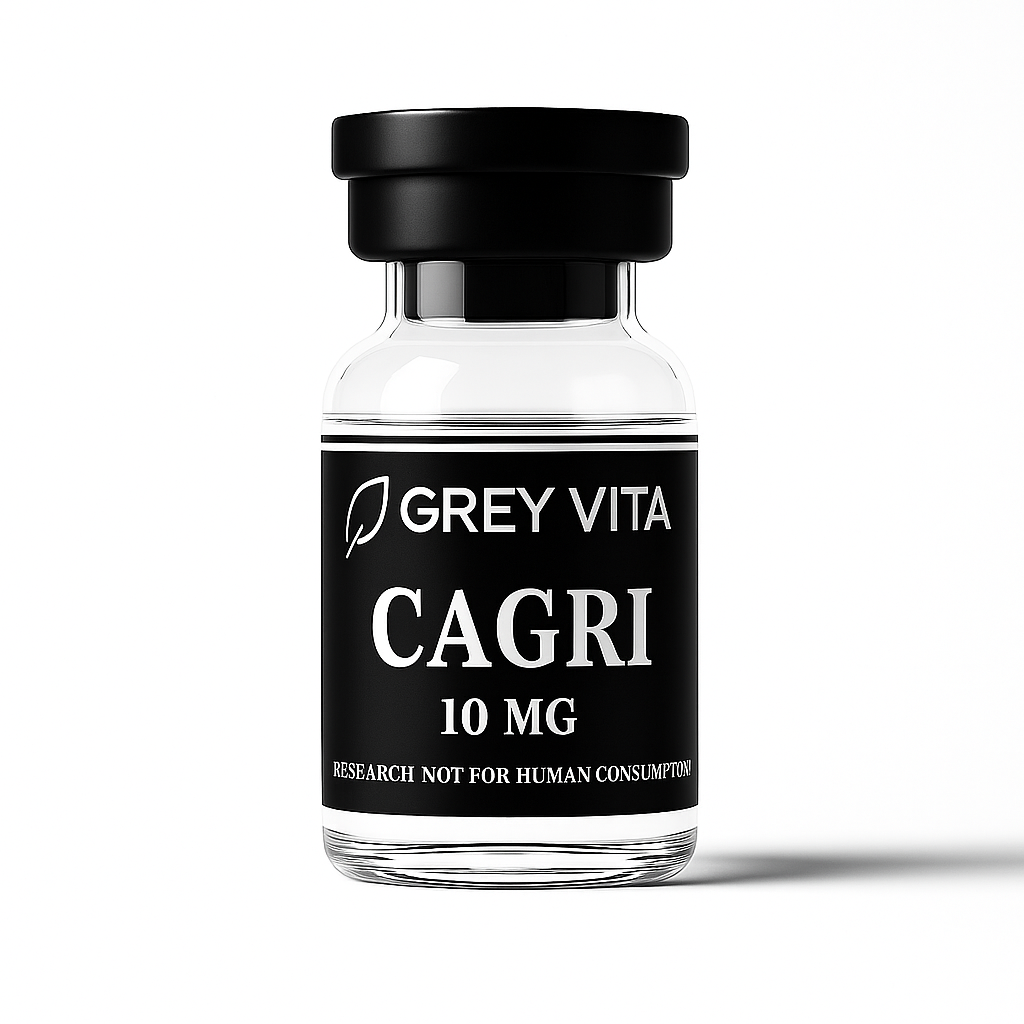


Cagri 10MG
CAS: 1415456-99-3
0 Left in Stock
Out of Stock
Reddit User Experiences With Cagrilintide (Cagri)
Positive Experiences
Many Reddit users report strong appetite suppression, especially when stacked with GLP-1 peptides like tirzepatide or semaglutide.
Example from a user discussing the combo with tirzepatide:
“Cagri stops any hunger for me but makes me tired.”
r/Cagrilintide
Another user who used it long-term with tirzepatide said:
“Been on the same dose of cagri/tirz for well over a year… results are worth it.”
r/Cagrilintide
People in clinical trials or research communities also report very fast appetite reduction:
“ZERO hunger… about 4 hours after my first dose.”
r/Zepbound
Common positive themes reported on Reddit:
• strong appetite suppression
• easier calorie restriction
• enhanced weight loss when stacked with GLP-1s
• reduced “food noise”
Some users even say it helps them stay on lower GLP-1 doses because the appetite effect is strong.
Cagrilintide (Cagri) – Research Overview
Chemical name: Acylated amylin analog
Class: Long-acting amylin receptor agonist
Target: AMY1/AMY2/AMY3 receptors (amylin receptor complexes)
Half-life: Extended, once-weekly profile in research models
Cagrilintide is a synthetic, stabilized analog of amylin — a naturally occurring peptide co-secreted with insulin.
It has been investigated in preclinical research for its effects on:
Appetite regulation
Gastric emptying
Body-weight modulation
Energy balance
Satiety signaling in the brain
All findings are from animal and in-vitro (lab) research.*
How Cagrilintide Works (Preclinical)
Cagri activates amylin receptors (AMY1, AMY2, AMY3), which are heavily involved in metabolic regulation.
Key mechanisms observed in research models:
- Appetite suppression via amylin-pathway signaling
(reduced desire to eat / earlier sense of fullness) - Slowed gastric emptying
(food moves more slowly through the stomach, increasing satiety) - Reduced meal size and frequency in animal models
(animals ate smaller meals and less often) - Modulation of hypothalamic satiety centers
(brain regions that regulate hunger become more responsive) - Lower food-seeking behavior in preclinical models
(reduced "food noise" in rodent behavioral studies)
Cagrilintide works through the amylin pathway, which is different from GLP-1 signaling.
This is why it behaves differently than semaglutide or tirzepatide.
Preclinical Research: Benefits of Cagrilintide By Itself
(Meaning not combined with semaglutide)
Below is a breakdown of what research has shown cagrilintide does on its own in animals and experimental systems.
- Appetite Reduction (decreased food intake)
In rodent models, Cagri produced a dose-dependent reduction in food intake
(animals ate significantly less).
This effect occurred through:
Amylin-receptor activation (satiety hormones)
Slowed gastric emptying (longer fullness)
Reduced reward-driven eating (less “hedonic feeding”) - Significant Weight-Modulating Effects in Animals
In diet-induced obese rodents:
Weight decreased more than with amylin alone
Fat mass specifically was reduced
Lean mass was more preserved (compared to some GLP-1 studies)
Cagrilintide alone produced meaningful weight-modifying effects in mice and rats without the need for GLP-1 agonists. - Very Strong Satiety Signaling
(researchers note this is stronger than semaglutide alone in certain settings)
Cagri produces:- Earlier meal termination (animals stop eating sooner)
- Greater fullness between meals
- Less interest in high-reward foods
- This is one reason why Cagri + sema is potent — but Cagri on its own is already highly effective.
- Slowed Gastric Emptying
(food digests more slowly, prolonging satiety)
Cagri has a pronounced effect on gastric motility:- Delayed stomach emptying
- Longer feelings of fullness
- Less frequent feeding behavior
This effect is mediated through amylin receptors rather than GLP-1 receptors.
- Improvements in Metabolic Markers (Preclinical)
- Cagri has shown potential preclinical effects on:
- Post-meal glucose excursions (smaller blood sugar spikes)
- Energy expenditure patterns (slight increases in metabolic rate in some models)
- Lipid metabolism (changes in fat-partitioning pathways)
Again:
These findings are animal-specific and don’t translate to confirmed human outcomes.
- Strong Effect on “Food Noise” in Rodents
(reduced obsessive or compulsive feeding behaviors)
Cagri is well-documented to impact:- Reward-driven eating
- Hyper-phagia (over-eating)
- Craving-like feeding behaviors
- In some comparison models, Cagri reduced compulsive feeding even more strongly than GLP-1 agonists.
- Long Half-Life with Once-Weekly Activity in Animals
Cagrilintide is acylated (fatty-acid–attached), allowing it to bind albumin —
(this keeps it in circulation longer).
In rodents and primates:- Single weekly dosing achieved stable levels
- Effects lasted throughout the dosing interval
- Concentration peaks were smoother (less nausea-associated spiking)
How Cagri Differs from Semaglutide (When Used Alone)
Here’s a simple breakdown:
Cagri (amylin pathway):
- STRONG satiety
- STRONG food-noise reduction
- STRONG appetite suppression
- Moderate gastric slowing
- Moderate metabolic effects
Semaglutide (GLP-1 pathway):
- Moderate-to-strong appetite suppression
- Strong gastric slowing
- Strong insulin/glucose effects
- Nausea risk tied to peaks
Cagri alone = “behavioral hunger control”
(in rodent models, animals showed less emotional/reward eating)
Sema alone = “physiological hunger control + glycemic effects”
This is why together they’re synergistic…
but Cagri alone is still a powerful satiety- and appetite-modulating peptide in its own right.
Safety & Tolerability (Preclinical)
- Nausea-like behavior in rodents was lower than in some GLP-1 models
- No acute toxicity was seen at research doses
- Amylin-pathway effects were dose-dependent
- Long-term safety, human pharmacokinetics, and clinical tolerability remain undetermined
Regulatory Status
Cagrilintide is an investigational research compound.
Not approved for medical, therapeutic, dietary, or cosmetic use.
For Research Use Only.
Not for human consumption.
Not for veterinary use.
No medical claims are made or implied.
It has been studied for benefits not just in type 2 diabetes, but for liver damage, alcohol-related liver disease, and heart/blood vessel disease.
There is some speculation about the role of this peptide in Alzheimer’s disease as well, but no research has been published in that particular sub-domain, yet.
Many trials, however, have looked at the combination of cagrilintide and semaglutide in the treatment of obesity and type 2 diabetes.
The two proteins appear to work synergistically to provide more robust and more permanent weight loss effects.
It is important to note that while preclinical studies suggest promising therapeutic potential, clinical trials in humans are limited.
Further research needs to be done to determine the efficacy and safety profiles.